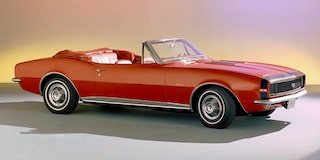
Code-named Panther during development, the Gen 1 Camaro was designed for a personal driving experience. Approximately 80 optional features were available, along with 15 exterior colors. A 1967 Camaro RS-SS convertible is shown.
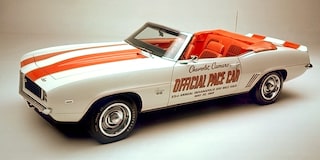
After the 1969 Camaro was selected as the Indianapolis 500® pace car, Chevrolet produced 3,675 replicas — each an RS-SS convertible in Dover White with Hugger Orange stripes and an orange houndstooth interior. A 350 Small Block engine was standard and a 396 Big Block was available.
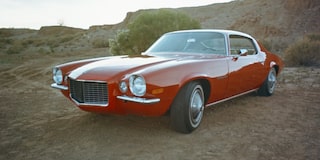
The Gen 2 Camaro was introduced in 1970 and featured an all-new architecture, along with sleeker styling. As with Gen 1 models, the RS package featured specific design cues, including the “split bumper” front end. A 1971 Camaro RS is shown.
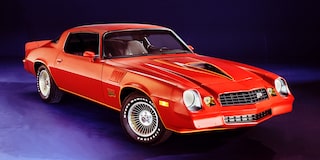
A facelift in 1978 helped push up Camaro sales by about 25 percent. In fact, sales of 272,631 were second only to 1979’s 282,571 for the two highest-selling years in Camaro history. A 1978 Camaro Z28 is shown.
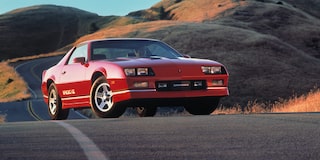
Launched in 1982, the Gen 3 Camaro drove into the high-tech ’80s with advanced features including its first-ever electronic fuel injection system. It also saw a renewed emphasis on performance, including the track-oriented 1LE package. A 1989 Camaro IROC-Z is shown.
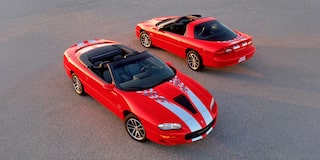
Performance continued to grow with the Gen 4 Camaro, which saw the return of the Camaro SS. In 1998, the 5.7-liter LS1 V8 debuted and elevated Camaro’s capability further. A pair of 2002 Camaro SS 35th Anniversary Edition models is shown.
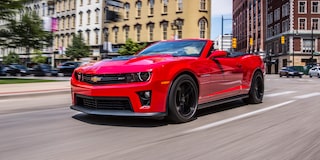
After an eight-year hiatus, the Gen 5 Camaro returned for 2010, wearing heritage-inspired styling. In the Camaro SS, a new 6.2-liter LS3 engine offered 426 horsepower, while all models featured a new independent rear suspension. A 2013 Camaro ZL1 convertible is shown.
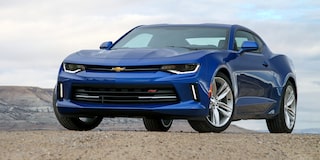
The Gen 6 Camaro was an evolution that saw increased refinement and all-new powertrains, ranging from Camaro’s first-ever 2.0-liter turbocharged engine to the 650-horsepower LT4 V8 offered in the Camaro ZL1. A 2016 Camaro RS is shown.